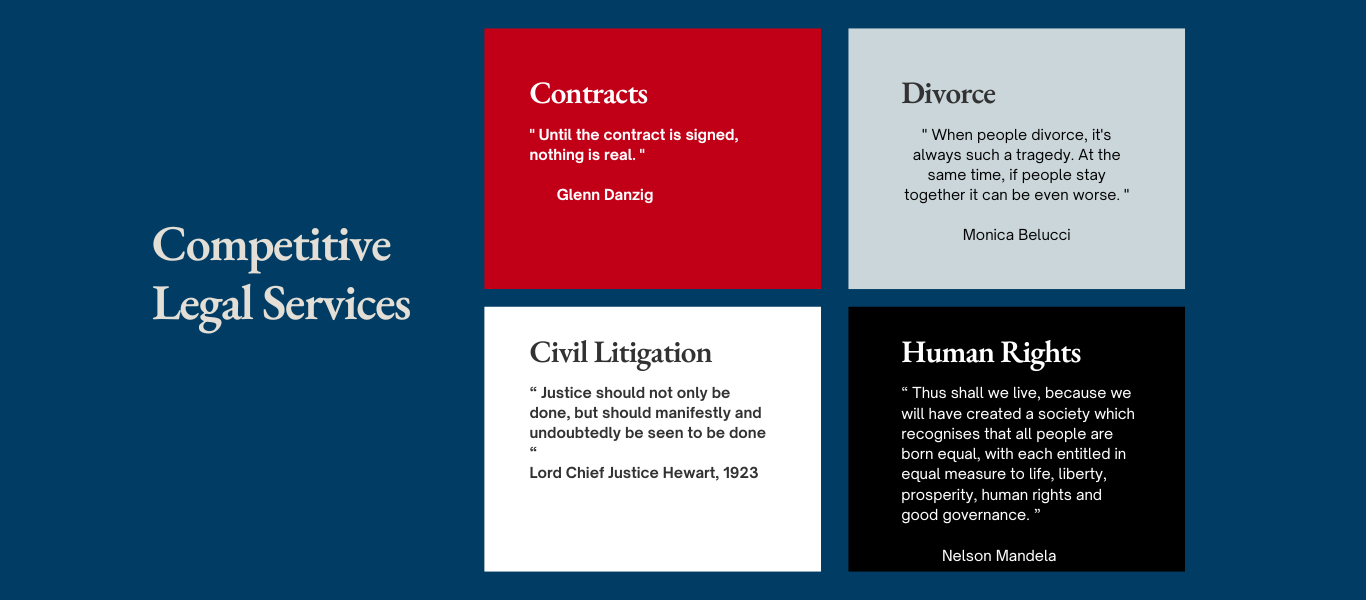
Our Areas of Law Practice
A legal process that is used to resolve disputes between two or more parties, without involving criminal charges. Civil litigation covers a wide range of legal matters, including breach of contract, personal injury, and property disputes.
A subcategory of civil litigation that deals with legal disputes arising out of business relationships or transactions. Examples of commercial litigation include breach of contract, fraud, business torts, and intellectual property disputes.
Customary law refers to legal rules derived from the customs and practices of a society or group. It is commonly found in indigenous communities, and it can govern many aspects of life, including marriage, property rights, and inheritance.
The RAF is responsible for providing appropriate cover to all road users within the borders of South Africa, rehabilitating and compensating persons injured as a result of motor vehicles in a timely and caring manner.
This is the area of law that deals with the management and distribution of a person’s property after their death. This includes drafting wills, administering estates, and settling disputes over the distribution of property.
Wills and trusts are two legal tools that are often used together in estate planning. A will is a document that specifies how a person’s property will be distributed after their death. A trust is a legal arrangement that allows a person (the grantor) to transfer their property to a trustee.
In legal terms, a contract is a legally binding agreement between two or more parties. For a contract to be valid, it must contain certain elements, such as an offer, acceptance, consideration, and mutual consent. A contract can be written or oral, but written contracts are generally considered more reliable and enforceable. If a contract is breached, the injured party may be able to seek legal remedies such as damages or specific performance. It’s important to be aware of the legal consequences of entering into a contract, and to seek professional advice if you have any questions or concerns.
In legal terms, divorce is the legal process of terminating a marriage or registered domestic partnership. In other words, divorce is the formal legal process of ending a marriage or registered domestic partnership, and it usually involves the division of property, and child custody and support, if there are children involved.
In legal terms, mining law is the body of law that governs the mining industry. Mining law covers a wide range of topics, including mineral ownership and rights, environmental regulations, health and safety standards, and taxation. Mining law also deals with the regulation of mining activities, such as exploration, extraction, and reclamation.
Environmental protection refers to the laws and regulations that are put in place to protect the environment and its natural resources.
In legal terms, an eviction is the legal process by which a landlord can remove a tenant from a property. This process typically involves the landlord serving the tenant with a notice to vacate the property, followed by a court hearing if the tenant does not comply with the notice.
There is some debate about whether consumer rights can be considered human rights. On the one hand, some argue that consumer rights are distinct from human rights, because they are more focused on economic transactions and protections, whereas human rights are generally understood to be broader and more fundamental. On the other hand, some argue that consumer rights are actually a subset of human rights, because they protect the fundamental rights of individuals to make choices about what they consume, and to be treated fairly in the marketplace.
The Labour Relations Act is a law that governs the rights and obligations of employers and employees in the workplace. It covers things like collective bargaining, strikes, and other forms of dispute resolution.